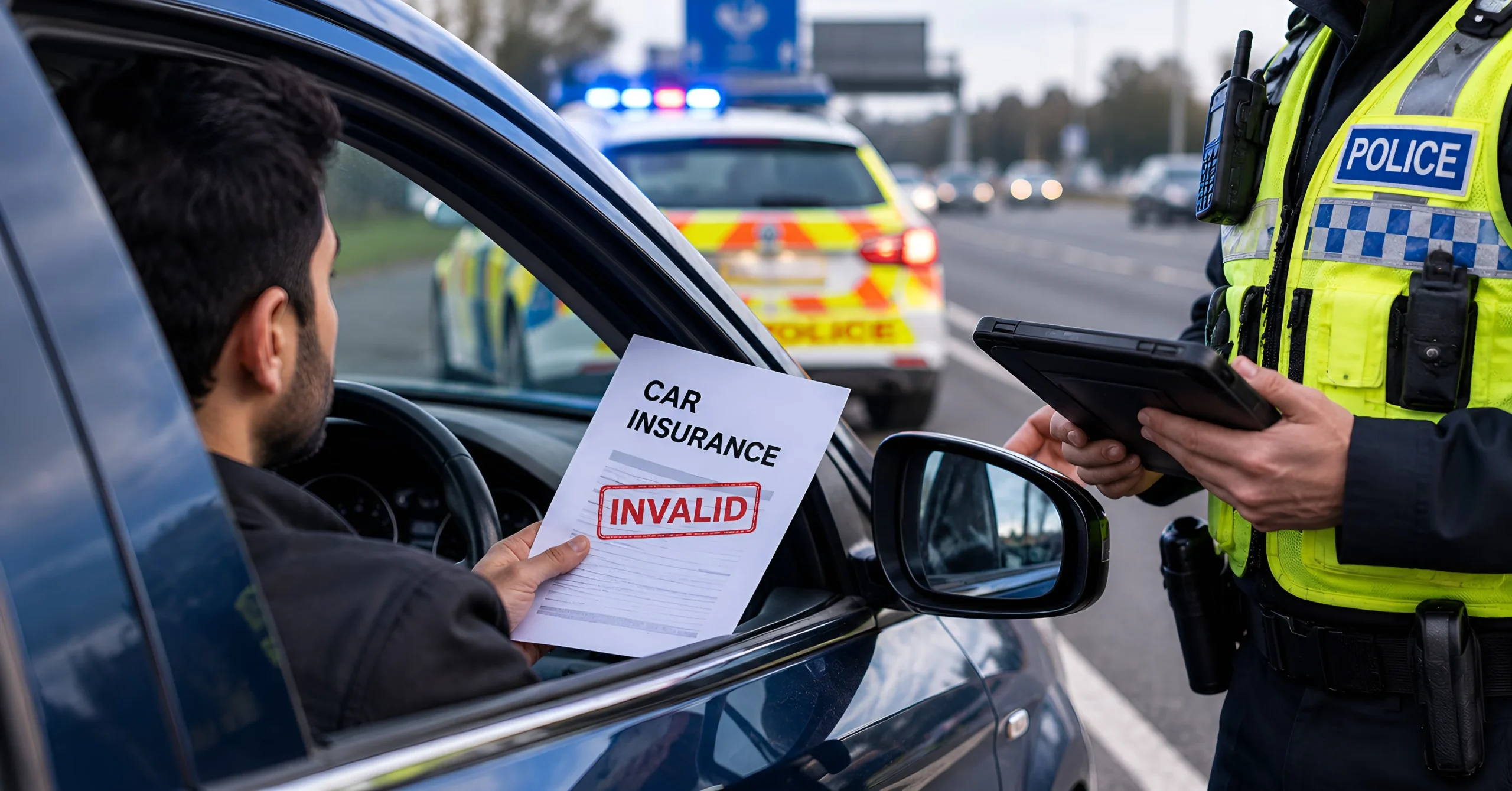
Being stopped by the police and told your car is not insured is a shock, especially if you thought you were covered. Driving without insurance is one of the most common motoring offences in England and Wales. It usually leads to an IN10 endorsement and at least 6 penalty points, and the police can seize your car at the roadside.
At Hi Solicitors, our driving offence solicitors in Bolton regularly help drivers who have been caught without insurance, including many who genuinely believed they were insured. This guide explains the offence, the penalties, what happens to your car, and the defences that may be available.
Is Driving Without Insurance a Criminal Offence?
Yes. Under section 143 of the Road Traffic Act 1988, it is an offence to use a motor vehicle on a road or other public place without at least third-party insurance. It is also an offence to cause or permit someone else to do so.
Using a Vehicle Without Insurance
This is a strict liability offence. That means you can be guilty even if you honestly believed you were insured. Your belief may help reduce the penalty, or may amount to a “special reason” (see below), but it is not usually a defence on its own.
You do not have to be driving at the time. “Using” a vehicle can include leaving it parked on a public road without insurance.
Permitting Someone Else to Drive Uninsured
If you own a car and let someone drive it when they are not insured, you can also be prosecuted. Both the owner and the driver can receive points and a fine.
Common Ways People End Up Uninsured
Many drivers are caught out by:
- a policy that lapsed or was cancelled, for example after a missed direct debit;
- assuming their policy includes driving other cars cover, when it does not;
- borrowing a car from a friend or family member who said they were insured;
- driving a work vehicle without being named on the employer’s policy; or
- using a car for business, delivery or ride-share work when the policy only covers social use.
What Is the Penalty for Driving Without Insurance?
There are two ways the police can deal with the offence: a fixed penalty or a prosecution at court.
| Fixed penalty | Court | |
| Fine | £300 | Unlimited, usually based on your weekly income |
| Penalty points | 6 | 6 to 8 |
| Driving ban | No | Possible, at the court’s discretion |
| Court costs and victim surcharge | No | Yes |
| Criminal conviction | No | Yes |
The Fixed Penalty
In straightforward cases, the police may offer a fixed penalty notice of £300 and 6 penalty points. If you accept it, you avoid court, but the 6 points and the IN10 endorsement still go on your licence.
Think carefully before accepting. If you are a new driver or already have 6 or more points, a fixed penalty could cost you your licence (see below).
If Your Case Goes to Court
The police may send your case to the magistrates’ court, for example if you have never passed a driving test, gave false details, were involved in an accident, or were driving a goods vehicle or for hire or reward. You may also choose to go to court if you want to dispute the offence or argue special reasons.
Under the Sentencing Council guideline, the court:
- must endorse your licence and impose 6 to 8 points if it does not ban you;
- may disqualify you instead, typically for up to 6 months, or 6 to 12 months in the most serious cases; and
- will normally impose a Band C fine, which starts at 150% of your relevant weekly income.
The guideline also says the fine should be set so that it is not cheaper to offend than to pay for insurance.
What the IN10 Code Means
IN10 is the endorsement code for using a vehicle uninsured against third-party risks. It will appear on your driving record whether you accept a fixed penalty or are convicted in court.
Can the Police Seize Your Car?
Yes. The police have the power to seize a vehicle being driven without insurance, even if you do not own it. They can identify uninsured vehicles quickly using automatic number plate recognition (ANPR) cameras linked to the Motor Insurance Database.
Getting Your Car Back
To get a seized vehicle back, you will usually need:
- photo ID and proof that you own the vehicle, such as the V5C logbook;
- a valid insurance policy covering the vehicle (and someone with a valid licence to drive it away); and
- payment of the statutory removal and storage charges, which are set by the government. Storage charges increase every day the vehicle is kept.
Act quickly. The costs build up fast, and you will need to arrange new insurance before you can drive the car away.
If You Do Not Reclaim It
If the vehicle is not claimed within the time limit given, usually 14 days, it can be sold or destroyed. Contact the police force or recovery operator as soon as possible to find out the deadline in your case.
Defences to Driving Without Insurance
Because the offence is strict liability, defences are limited. But there are situations where you may not be guilty, or where the court can avoid giving you points.
Proving You Were Insured
If you were actually insured, the case should not go ahead. If you say you had insurance, it is up to you to prove it, so find your policy documents, certificate and any emails from your insurer. Insurance databases are sometimes wrong or out of date, particularly after a recent change of car or policy.
Employed Drivers
The law gives a specific defence to an employee who was driving a vehicle that did not belong to them, in the course of their employment, and who did not know and had no reason to believe that it was not insured. If your employer’s vehicle was uninsured without your knowledge, get advice before you accept a fixed penalty.
Special Reasons
If you are guilty but were genuinely misled into believing you were insured, for example by your employer, the car’s owner or your insurer, you may be able to argue special reasons. If the court accepts special reasons, it can decide not to endorse your licence with points or ban you, although you are still convicted.
Special reasons must be argued in court, so you cannot raise them if you accept a fixed penalty. Our guide on special reasons for not disqualifying explains how the process works.
Driving Without Insurance as a New Driver or With Existing Points
New Drivers
If you passed your test less than 2 years ago, your licence will be revoked if you reach 6 or more points. Because an IN10 carries at least 6 points, a single no insurance offence is usually enough to lose your licence, even if you accept a fixed penalty. Any unexpired points from your provisional licence also count.
If your licence is revoked, you will have to reapply for a provisional licence and pass both the theory and practical tests again. Read more in our guide to new drivers getting 6 points in their first 2 years.
Totting Up
If the IN10 takes you to 12 or more points within 3 years, you will normally face a totting up ban of at least 6 months. You may be able to avoid the ban by showing it would cause exceptional hardship. See our guide on 12 penalty points and a driving ban and our totting up ban service.
How Long Does an IN10 Stay on Your Record?
On Your Driving Licence
An IN10 endorsement stays on your driving record for 4 years from the date of the offence. The points count towards totting up for 3 years from the date of the offence.
Your Car Insurance
An IN10 is treated seriously by insurers, and you should expect your premiums to rise for several years. When applying for insurance, answer every question about motoring convictions and endorsements honestly. Failing to disclose an IN10 that you were asked about could make your new policy invalid, putting you at risk of committing the same offence again.
Your Criminal Record
A fixed penalty is not a criminal conviction. If your case goes to court and you are convicted, you will have a criminal conviction. For an adult, a conviction with a driving endorsement normally becomes spent after 5 years, or when any driving ban ends if that is later. Our guide on when convictions become spent explains what that means for job applications and DBS checks.
How Hi Solicitors Can Help
If you have been stopped for driving without insurance, get advice before you accept a fixed penalty or reply to a court summons. Our driving offence team can:
- check whether you were actually insured, and whether the evidence against you is correct;
- advise whether the employed driver defence applies;
- prepare and argue special reasons to keep points off your licence;
- advise new drivers on the risk of losing their licence; and
- represent you at the magistrates’ court to keep any fine, points or ban as low as possible.
For confidential advice, call Hi Solicitors on 01204 371 414 or book a free initial consultation.
Frequently Asked Questions
How many points do you get for driving without insurance?
A fixed penalty carries 6 points. If your case goes to court, the court must give you between 6 and 8 points unless it bans you from driving instead or finds special reasons.
Can I go to prison for driving without insurance?
No. Driving without insurance is not an imprisonable offence on its own. However, the fine is unlimited, and you can be banned from driving.
I thought my policy covered me to drive other cars. Is that a defence?
Usually not. Many policies no longer include driving other cars cover, and where they do, it often has strict conditions. A genuine and reasonable mistake may support a special reasons argument, but you will need to show what you were told and why your belief was reasonable.
Will I lose my licence for driving without insurance?
You could. A new driver who passed their test within the last 2 years will usually lose their licence because an IN10 carries at least 6 points. Experienced drivers can be banned at the court’s discretion or under the totting up rules if they reach 12 points.
Should I accept the £300 fixed penalty?
It depends. A fixed penalty avoids court and a criminal conviction, but you cannot then argue special reasons, and it may cost a new driver their licence. Speak to a solicitor before you decide.
This article is for general information only and does not constitute legal advice. The law may have changed since it was published, and every case is different. For advice on your situation, contact Hi Solicitors.