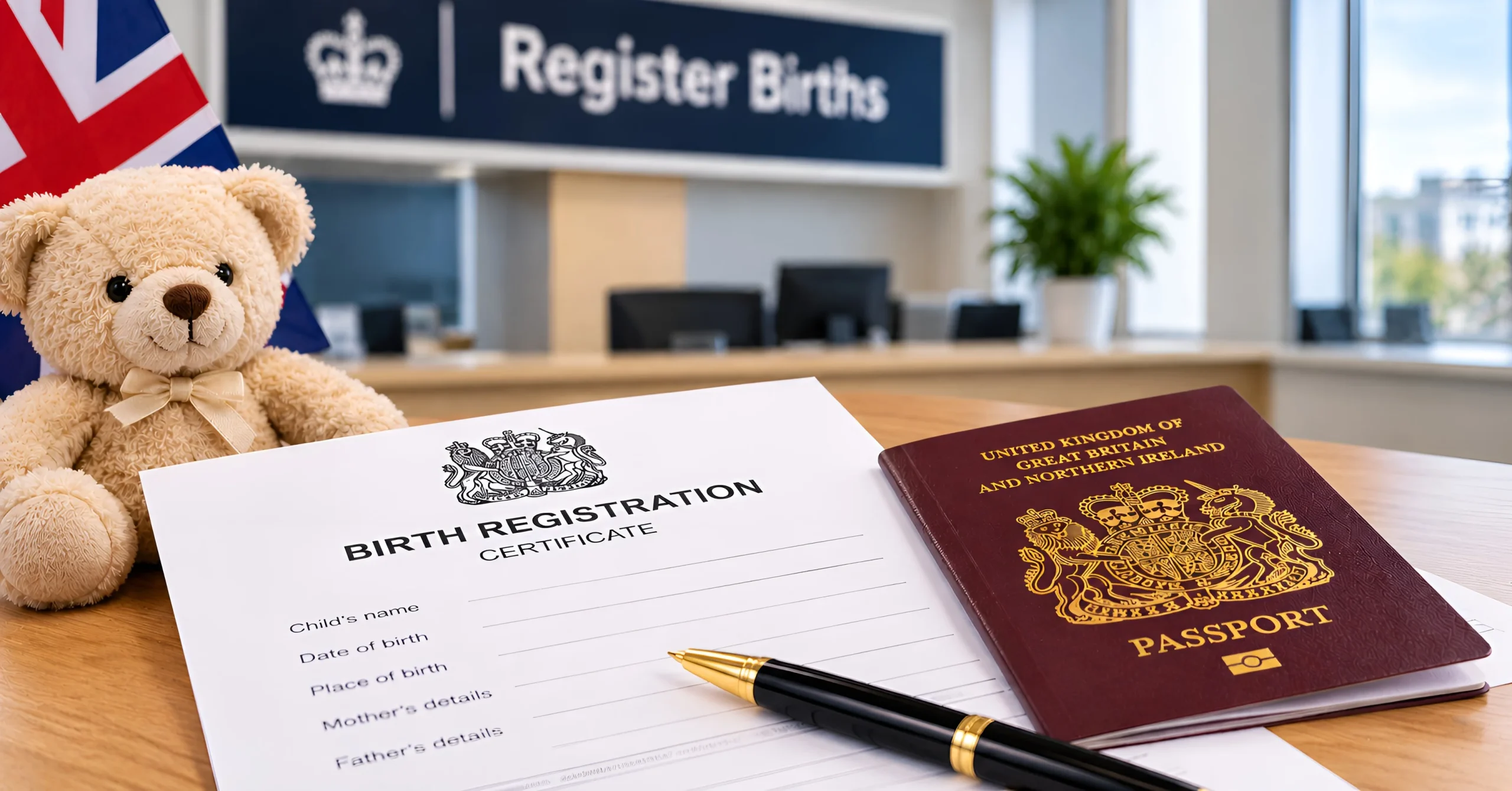
Many parents assume that a child born in the UK is automatically British. That is not always the case. If neither parent was British or settled when the child was born, the child is not British at birth, but they may have a right to register as a British citizen later.
At Hi Solicitors, our immigration solicitors in Bolton help families register their children as British citizens, often soon after a parent gets indefinite leave to remain. This guide explains when a UK-born child is British automatically, the main routes to registration, the fees and documents, and what happens after you apply. It reflects GOV.UK guidance and fees as of October 2026.
Is a Child Born in the UK Automatically British?
A child born in the UK on or after 1 January 1983 is usually automatically British if, at the time of birth, at least one parent was:
- a British citizen; or
- settled in the UK, for example with indefinite leave to remain (ILR) or settled status under the EU Settlement Scheme.
For children born before 1 July 2006, different rules can apply if only the father was British or settled and the parents were not married.
When a Child Is Not British at Birth
If neither parent was British or settled on the day the child was born, for example because they were in the UK on a work, student or family visa, the child is not automatically British. The child will usually hold the same immigration status as their parents until they register or get their own status.
How to Check Whether Your Child Is Already British
If your child is automatically British, you do not need to register them. Instead, you can apply for a British passport for them. If you are unsure, our team can check your child’s status before you spend money on an application.
Registering When a Parent Becomes Settled or British
This is the most common route. It is set out in section 1(3) of the British Nationality Act 1981, and it is an entitlement: if your child meets the requirements, the Home Office must register them.
Who Qualifies
Your child can register under this route if:
- they were born in the UK;
- neither parent was British or settled when they were born; and
- after the birth, one parent has become a British citizen or settled in the UK, for example by getting indefinite leave to remain, settled status or permanent residence.
If you have recently been granted settlement, our guide to indefinite leave to remain after 5 years explains the next steps for your own status.
You Must Apply Before Your Child Turns 18
The Home Office must receive the application before the child’s 18th birthday. After that, this route closes. Children aged 10 or over must also meet the good character requirement.
Registering After Living in the UK for the First 10 Years
Under section 1(4) of the British Nationality Act 1981, a child born in the UK who was not British at birth can register if they have lived in the UK for the first 10 years of their life. This route does not depend on the parents’ immigration status at all, so it can help children whose parents have never been settled.
Who Qualifies
Your child can register under this route if:
- they were born in the UK and were not British at birth;
- they are aged 10 or over when you apply; and
- they have lived in the UK for their first 10 years, with no more than 90 days outside the UK in each of those years.
They must also meet the good character requirement.
If Your Child Was Abroad for Longer
The Home Office can use its discretion to overlook extra absences. Its guidance says excess absences should normally be waived if the child was not away for more than 180 days in any one year and 990 days in total, or if the absences were caused by circumstances beyond the family’s control, such as serious illness. Explain the reasons for any long absences in the application.
There Is No Upper Age Limit
Unlike the section 1(3) route, there is no age limit. A person born in the UK who lived here for their first 10 years can register as an adult, although the fee is higher and they must attend a citizenship ceremony.
Other Routes to Register a Child
A Parent Joins the UK Armed Forces
A child born in the UK on or after 13 January 2010 can register under section 1(3A) if, after the birth, a parent joins the UK armed forces. The child must be under 18 when the application is made.
Discretionary Registration
If your child does not meet any of the routes above, the Home Office has a general discretion to register any child under 18 under section 3(1) of the Act. It considers factors such as the child’s future intentions, their links to the UK, the parents’ immigration status and the child’s best interests.
Discretionary applications are judged case by case and are harder to predict, so take advice before applying.
How to Apply
Most applications are made online. The online form is based on Form MN1. You can also apply by post using Form T.
| Route | Who it is for | Age limit | Form |
| Section 1(3) | Parent became British or settled after the birth | Must apply before 18 | Online (MN1) |
| Section 1(4) | Lived in the UK for the first 10 years | None (must be 10 or over) | Online or Form T |
| Section 1(3A) | Parent joined the UK armed forces after the birth | Must apply before 18 | Online (MN1) |
| Section 3(1) | Discretionary cases | Must apply before 18 | Online (MN1) |
Fee and Fee Waiver
From 8 April 2026, the fee to register a child under 18 is £1,000. If your child turns 18 before a decision is made, an extra £130 citizenship ceremony fee applies. You may be able to apply for a fee waiver if your child is under 18 and you cannot afford the fee. The fee for an adult registering under the 10-year route is £1,670, including the ceremony fee.
Documents and Referees
You will usually need:
- your child’s full UK birth certificate showing both parents’ names;
- evidence of the parent’s British citizenship or settled status, such as a passport, eVisa or certificate;
- for the 10-year route, evidence that your child lived in the UK, such as school, GP and nursery records; and
- details of two referees who have known your child for at least 3 years. One must hold a British passport, and at least one should know the child professionally, such as a teacher or doctor.
You can upload copies online or have them scanned at your appointment.
Biometrics
After applying, you will book an appointment at a UKVCAS centre for your child’s photo and, if they are 5 or over, fingerprints. A parent or guardian must go with children under 16.
Good Character for Children Aged 10 or Over
If your child is 10 or older, they must meet the good character requirement. You will need to declare any cautions, convictions or other relevant conduct. For most children this is a formality, but answer the questions fully and honestly. Our guide on whether you should accept a police caution explains how a caution can affect a citizenship application.
After You Apply
How Long It Takes
The Home Office aims to decide citizenship applications within 6 months. You will be told if it will take longer. A priority service may be available for an extra fee.
Citizenship Ceremonies
Children who are under 18 when the application is decided do not have to attend a citizenship ceremony. Applicants who are 18 or over must attend a ceremony and take the oath of allegiance and pledge before they become British.
Getting a British Passport
Once your child is registered, you will receive a certificate of registration. Your child cannot travel to the UK using this certificate, so apply for a British passport as soon as possible. Once your child is British, they can no longer use their old immigration status, eVisa or BRP to travel, so plan any trips abroad around the passport application.
How Hi Solicitors Can Help
At Hi Solicitors, our immigration team can:
- check whether your child is already British, so you do not pay for an application you do not need;
- advise which registration route is best for your child;
- prepare the application, evidence and referee details;
- explain excess absences under the 10-year route;
- advise on good character issues for children aged 10 or over; and
- help with British citizenship and naturalisation applications for the rest of the family.
For confidential advice, call Hi Solicitors on 01204 371 414 or book a free initial consultation.
Frequently Asked Questions
My child was born in the UK. Do they need to apply?
Only if neither parent was British or settled when they were born. If one parent was British or settled at the time of birth, your child is usually already British, and you can simply apply for a British passport.
I have just got indefinite leave to remain. Can I register my child straight away?
Yes. If your child was born in the UK before you became settled, they can register under section 1(3) as soon as you get indefinite leave to remain or settled status. The application must be received before your child turns 18.
How much does it cost to register a child as a British citizen?
From 8 April 2026, the fee is £1,000 for a child under 18. A £130 ceremony fee applies only if the child turns 18 before the decision. A fee waiver may be available if you cannot afford to pay.
What if my child has spent long periods abroad?
For the 10-year route, your child should not have been outside the UK for more than 90 days in each of their first 10 years. The Home Office can overlook longer absences in some cases, especially if they were not by choice, so explain the reasons in the application.
Do both parents have to agree to the application?
For the section 1(3) and 1(4) routes, the Home Office says a lack of consent from one parent is not a reason to refuse the application, although it normally asks for both parents’ consent. For discretionary applications, both parents are usually expected to consent.
This article is for general information only and does not constitute legal advice. The law may have changed since it was published, and every case is different. For advice on your situation, contact Hi Solicitors.