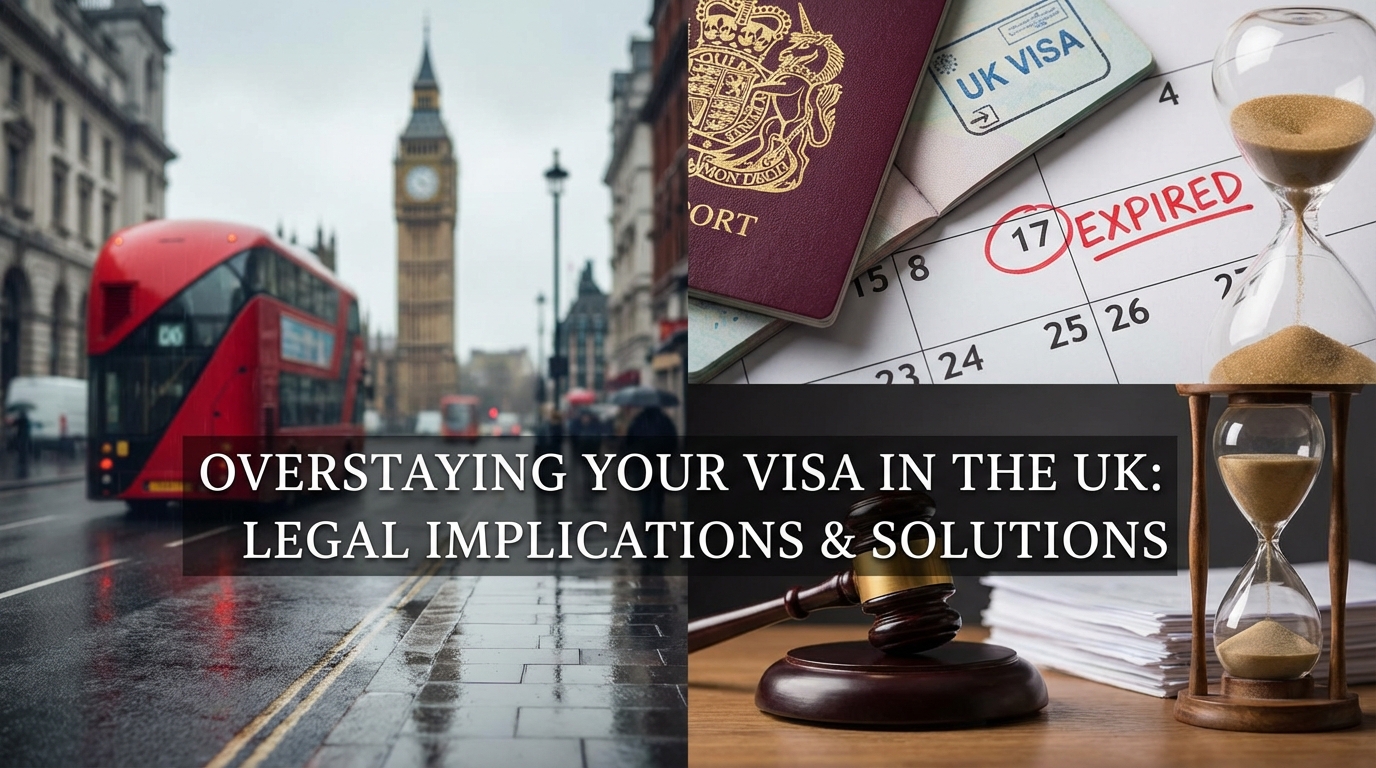
Overstaying a UK visa — remaining in the country after your leave to remain expires — is one of the most common immigration issues people face, and one of the most serious. The consequences can range from a re-entry ban to immigration detention and removal. This guide explains exactly what the law says, what the consequences are at each stage, and what genuine options may still be available to you.
Our immigration solicitors in Bolton deal with overstay cases regularly and understand how distressing and confusing this situation can be. Whether you missed a deadline by a matter of days or have been in the UK without valid leave for a longer period, the most important thing you can do is understand your position clearly before taking any action.
Do not delay. If your visa has already expired, seek specialist legal advice immediately. The longer an overstay continues, the more limited your options become — and the more serious the consequences.
What Is Overstaying?
Overstaying occurs when a person remains in the UK after their visa or leave to remain has expired, without having made a valid application for further leave before that expiry date.
Even a single day’s overstay is a breach of UK immigration law. The Home Office has systems in place to identify overstayers through border data, employer checks, and landlord reporting. Even a short overstay can affect future visa applications — sometimes permanently.
What Are the Consequences of Overstaying?
Re-Entry Bans
The most common consequence is a ban on re-entering the UK after you leave voluntarily or are removed. The length of the ban depends on how long you overstayed and how you left:
- Under 30 days — generally no automatic ban if you leave the UK voluntarily
- 30 days to 6 months — 1-year re-entry ban
- 6 months to 1 year — 2-year re-entry ban
- Over 1 year — 5-year re-entry ban
- Forcibly removed by the Home Office — up to a 10-year ban in some cases
Leaving voluntarily before the Home Office takes formal action generally results in a shorter ban than being removed — and protects your ability to make future applications from outside the UK.
Removal and Detention
The Home Office can initiate administrative removal against anyone in the UK without valid leave. In some cases this includes detention in an immigration removal centre while your case is decided. If you have received removal directions or a formal removal notice, visit our Deportation and Removals page to understand your rights and the options available to you.
Impact on Future Visa Applications
Any previous overstay must be declared on all future UK visa applications. The Home Office treats previous immigration breaches seriously. Failing to disclose a known overstay — even an old one — can result in a finding of deception, which carries far more serious long-term consequences than the overstay itself. Transparency, handled carefully with the right legal advice, is always the better approach.
Loss of Rights While Overstaying
While your leave has lapsed, you are not legally entitled to work in the UK, access most NHS services beyond emergency care, or claim public funds. Employers, landlords, and banks are all legally required to carry out right-to-work and right-to-rent checks, which means your overstay can directly affect your housing and employment situation in ways that may escalate quickly.
What If I Applied to Extend My Visa Before It Expired?
This is a crucial distinction that many people are unaware of. If you submitted a valid extension application before your existing leave expired, you may be protected by something called Section 3C leave — a legal provision that allows you to remain in the UK lawfully while your application and any subsequent appeal is being decided.
We have a detailed guide explaining exactly how this works: Section 3C Leave Explained. The critical point to understand is that Section 3C leave only applies if your application was submitted before your visa expired. Applying even one day after your expiry date means you are overstaying from the moment your original leave ended — Section 3C does not apply retrospectively.
If you are unsure whether Section 3C leave applies to your situation, our Visa Extensions and Renewals team can review your circumstances and advise you clearly on your current status.
Key point: Section 3C leave is not automatic and is not a safety net for late applications. If you are uncertain about your current immigration status, take legal advice before taking any action — including travelling internationally.
Can You Regularise Your Status After Overstaying?
In some circumstances, yes — but it depends entirely on your individual situation. The options that may be available include:
Human Rights Application (Article 8)
If you have strong ties to the UK — a British or settled partner, dependent children, or long-term residence — you may be able to make a Human Rights Application based on your right to private and family life. The Home Office must consider Article 8 of the European Convention on Human Rights before removing anyone, even where they currently have no valid leave to remain. A well-prepared human rights application can be a genuine route to regularising your status.
Applying Through a Family Visa Route
If you are in a genuine relationship with a British citizen or a person with settled status, a Spouse or Family Visa application may be possible. However, an existing overstay can significantly complicate eligibility, and switching from within the UK may not be permitted depending on your visa history and circumstances. Professional advice from specialist solicitors in Bolton is essential before submitting any application — a poorly prepared or premature application can make your situation worse rather than better.
Voluntary Departure
If no route to regularise your status in the UK is currently available, leaving the UK voluntarily before the Home Office initiates formal removal proceedings generally results in a shorter re-entry ban. This option may protect your ability to make a stronger future application from outside the UK once your circumstances change or a route becomes available.
What to Do Right Now If You Are Overstaying
If you are currently overstaying, the most important thing you can do is take advice from a specialist immigration solicitor as soon as possible. In the meantime:
- Do not attempt to travel internationally — you are likely to be refused re-entry at the border and your situation will worsen significantly
- Do not apply for anything without legal advice — an incorrect or poorly prepared application can close off routes that are still open to you
- Do not ignore any correspondence from the Home Office — deadlines in immigration matters are strict and missing them can remove your right to challenge a decision
- Keep all documentation you have — your original visa, any application receipts, Home Office correspondence, and evidence of your life in the UK
A solicitor can assess whether any legitimate route to remain is open to you, advise honestly on the realistic risks you face, help you make the strongest possible application if a route exists, and represent you quickly if the Home Office takes action.
Appealing a Removal Decision
If the Home Office has already issued removal directions or a notice of removal, you may have the right to appeal that decision to the First-tier Tribunal (Immigration and Asylum Chamber). Our Visa Refusal and Appeals team handles immigration appeals at every stage and can give you an honest assessment of the merits of your case before you decide how to proceed. Appeal deadlines are strict — do not wait.
How Hi Solicitors Can Help
Our immigration solicitors in Bolton deal with overstay cases of all kinds — from people who missed a renewal deadline by a matter of days through no fault of their own, to complex long-term cases involving significant periods of unlawful presence in the UK. We provide clear, honest advice without judgment and work quickly because we understand the time pressures involved.
From your very first consultation, you will know exactly where you stand, what your realistic options are, and what the strongest next step looks like. We never give vague reassurances — we give you the full picture so you can make an informed decision.
Whether you need help with a visa extension, a Human Rights application, or urgent advice to prevent removal from the UK, we are here to help.
Call 01204 371 414 for a free initial consultation, or visit our Immigration Solicitors page to find out more about how we can help.
187b Derby St, Bolton, BL3 6JT · hisolicitors.co.uk
FAQ
Q: What counts as overstaying a visa in the UK?
Overstaying occurs when you remain in the UK after your visa or leave to remain has expired, without having made a valid application for further leave before that date. Even one day counts as an overstay in the eyes of UK immigration law. If you submitted a valid extension application before your visa expired, you may be protected by Section 3C leave — read our Section 3C Leave Explained guide for more detail.
Q: Will I be automatically deported if I overstay my visa?
Not automatically, but the Home Office does have the power to remove anyone without valid leave to remain in the UK. Removal is more likely the longer an overstay continues, if you come to the attention of immigration enforcement, or if you apply for something that triggers a status check. Taking early legal advice significantly improves your options.
Q: How long is the ban on returning to the UK if I overstay?
The length of any re-entry ban depends on how long you overstayed and how you left the UK:
- Under 30 days (voluntary departure) — generally no automatic ban
- 30 days to 6 months — 1-year ban
- 6 months to 1 year — 2-year ban
- Over 1 year — 5-year ban
- Forcibly removed — up to a 10-year ban
Leaving voluntarily before the Home Office takes action generally results in a shorter ban than being removed.
Q: Can I still apply for a visa if I have previously overstayed?
Yes, but you must declare the overstay on any future application. The Home Office takes previous immigration breaches seriously, and an undisclosed overstay can result in a finding of deception — which is far more damaging than the overstay itself. With the right legal advice, a previous overstay does not necessarily prevent a successful future application, but it does need to be handled carefully.
Q: What is Section 3C leave and does it protect me from overstaying?
Section 3C leave is a legal provision that allows you to remain in the UK lawfully while a valid in-time extension application — and any appeal — is being decided. It only applies if your application was submitted before your existing leave expired. If you applied even one day after your visa expired, Section 3C leave does not apply and you are overstaying from the moment your original leave ended. See our full guide: Section 3C Leave Explained.
Q: Can I work in the UK while overstaying?
No. Once your leave to remain has expired and you have no valid Section 3C protection, you do not have the right to work in the UK. Employers are legally required to carry out right-to-work checks, and working without authorisation can have serious consequences for both you and your employer.
Q: Is there any way to stay in the UK legally after overstaying?
In some circumstances, yes. Options that may be available include making a Human Rights Application based on family or private life, applying through a family visa route if you are in a genuine relationship with a British citizen or settled person, or making an asylum claim if you face genuine risk on return. Each option depends heavily on your individual circumstances and specialist advice is essential before taking any steps.
Q: Should I leave the UK voluntarily if my visa has expired?
This depends entirely on your circumstances. In some cases voluntary departure is the most pragmatic option — it results in a shorter re-entry ban and protects future applications. In other cases, a legal route to remain may still be open to you and leaving prematurely would close it off. Do not make this decision without taking specialist advice first. Call Hi Solicitors on 01204 371 414 for a free initial consultation.
Q: What should I do if I have received a removal notice while overstaying?
Contact a specialist immigration solicitor immediately. You may have the right to appeal the removal decision to the First-tier Tribunal — but deadlines are strict. Our Visa Refusal and Appeals team can advise you on the merits of your case and act quickly on your behalf.